Speakers


图片1.png

Prof. Shuai Liu

Hunan Normal University, China

Shuai Liu (M-22,SM-25), male, professor and doctoral supervisor, Director of Key Laboratory of Educational Informatization and Intelligence of Higher Education Institutions in Hunan Province. His main research directions are computer vision, multimodal information processing, and AIED. Professor Liu has published over 80 high-level papers in journals such as IEEE TFS/TMM/TITS/ and conferences such as ACM MM, with a total citation of over 8,000 times and a Google h-index of 48. He has been consecutively selected for the list of the world's top 2% scientists from 2021 to 2025 (Stanford University). He is a review expert for the Key R&D Program of China, a communication review expert for the National Natural/Social Science Foundation of China. Professor Liu serves as an editorial board member and reviewer for several top journals and conferences (such as CCF Rank A, SCI Q1, etc.). He mainly engages in information processing in education, dedicated to applying visual and multimodal information to solve educational problems, enhance teaching quality, and achieve educational precision and equity. The main research direction is AIED, including the understanding and mining of educational texts, the analysis and evaluation of class, and empirical research on AIED.


Speech Title: AI-IBCS: An AI Adapted In-class Behavior Coding System

Abstract: Since the abstraction of existing in-class behavior coding systems, the accuracy of AI-based behavior coding has remained low, making it difficult to carry out large-scale in-class evaluations. Therefore, on the basis of reselecting in-class behaviors with significant importance for in-class evaluation based on literature reviews, in-class observations, expert consultations and other methods, as well as taking large-scale high-quality in-class videos as the research subject, followed by the reselected behaviors analysis in teaching contexts to abstract them into sequential actions with high discrimination, an AI based in-class behavior coding system (AI-IBCS) is proposed with maximum differentiation coding, in which the accuracy of AI-based behavior coding can reach that of manual coding, supporting large-scale in-class evaluations. The proposed AI-IBCS is experimented in analysis of 36 high-quality in-class videos from the National Smart Education Platform for Primary and Secondary Schools and compared with existing coding systems to verify its superiority. Experimental results show that the proposed AI-IBCS system more efficiently, accurately and diversely reflects the accurate in-class situation in evaluation than existing coding systems, which lays a foundation for subsequent large-scale in-class evaluation research based on AI.


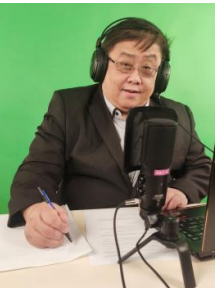
wechat_2025-09-02_151538_587.png

Prof. Eric Y.H. TSUI

The Hong Kong Polytechnic University, Hong Kong, China

Professor Eric Tsui is the professor of the Department of Industrial and Systems Engineering of The Hong Kong Polytechnic University, and Associate Director of Knowledge Management and Innovation Research Centre of The Hong Kong Polytechnic University. Eric Tsui joined Computer Sciences Corporation (CSC) in 1989 after years of academic research in automated knowledge acquisition, natural language processing, case-based reasoning and knowledge engineering and tools. His research was supported by grants and scholarships from Arthur Young, Rank Xerox, CSC, Graphic Directions and the Australian Research Council. He was also a gratis visitor to Microsoft Research in February, 2000. Between August 2000 and January 2005, he assumed the roles of Chief Research Officer, Asia Pacific for CSC as well as Innovation Manager at Australian Mutual Provident (Australia) and Maybank (Malaysia). During his tenure at CSC, he made significant contributions to CSC's expert systems products, applied research and innovation programmes. A recipient of several international awards in Knowledge Management and E-Learning, Professor Tsui has B.Sc (Hons.), PhD and MBA qualifications. His research interests are automated knowledge acquisition, natural language processing, case-based reasoning, and knowledge engineering and tools,etc.


Speech Title: Technologies for facilitating Knowledge creation & learning

Abstract:This talk explores how Generative AI (G-AI), including ChatGPT, and metaverse can enhance student engagement and personalised learning. It covers the use of G-AI as a virtual tutor offering real-time, tailored support. The session also introduces gamification and self-paced learning strategies that adapt to individual learners’ needs. The use of metaverse technologies to create immersive, interactive learning environments. Together, these innovations offer powerful tools for educators to foster deeper understanding, motivation, and flexible learning pathways. 


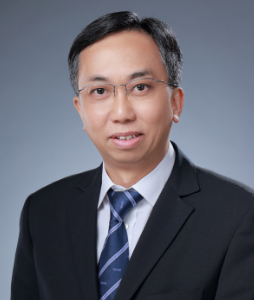
微信图片_20250915160012_23_329.png

Prof. Simon K.S. Cheung

Hong Kong Metropolitan University, China

Currently the Chief Information Officer in Hong Kong Metropolitan University, Dr. Simon K.S. Cheung has been working in the higher education sector for over 30 years in various administrative capacities, mainly in IT and educational technology, while also undertaking academic duties such as teaching, research, course development, and programme accreditation. He received his BSc and PhD in Computer Science, and Master of Public Administration from City University of Hong Kong and University of Hong Kong respectively. Dr. Cheung had been admitted as IET fellow, IMA fellow, BCS fellow, HKIE fellow, HKCS fellow, and IEEE senior member. He is active in research, with over 200 publications in two distinct areas, namely, software and systems engineering, and innovation and technology in education. Among other consultancy roles, he serves in the advisory board and editorial board for reputable international journals in these areas, including ETHE (SSCI, Q1), AJET (SSCI, Q1), and SN Computer Science (Scopus, Q1). Awards in recognition of his achievements include the Outstanding Research Publication Award from Hong Kong Metropolitan University, Outstanding CIO Award from Hong Kong IT Joint Council, and Honour for Excellence, CIO Award from the CIO Asia.

Speech Title: The Prospect of Open Access Textbooks in the AI Era

Abstract: As one form of open educational resources, open access textbooks have been used as official  textbooks for two decades. In this AI era, it is time for researchers and practitioners in the field to revisit  open access textbooks. This presentation investigates the operation model of open access textbooks,  including their set-up, sourcing and updating of contents, open licenses, usages, review and quality  assurance, through a review of six open access textbook platforms. The 5Rs (retain, re-use, revise, remix and re-distribute) provision via open licenses are the definite advantage of open access textbooks,  especially in enabling adaptation to cater for specific teaching and learning needs. Other advantages include the coherent in contents and alignment to curricular guidelines. These strengths are still the  strengths while the presence of AI technologies offer opportunities for improving efficiency in content  creation and adaptation, facilitating continuous content development, and better catering for learning  differences. Open access textbooks are indispensable for their unique values, such as open accesses and open licensing, that enable the sharing of resources to make education well accessible to all.


Pak-Dendar-255x255.jpg

Prof. Deni Darmawan

Universitas Pendidikan Indonesia, Indonesia

Deni Darmawan is a Professor with the Highest Hi-Index, 88 and Totally Citation 11952 on Google Scholar of all professors in the Indonesian Education University. In 2021 until now has been ranked first in the field of Bio-communication Through ICT Implementation from ADScientific Index 2023 information can be accessed at https://www.adscientificindex.com/? con=&country_code =id . 2022 Get the first rank from a professor at UPI for the same. In University Level he is as The First Rank in Educational Research Bio-communication and Artificial Intelligence (AI) for Big Data Digital Management. In 2021 Have the new Intellectual Property Rights Oriented Products about Virtual Community Digital Learning Nusantara (VCDLN) from the Ministry of Human Rights of the Republic of Indonesia. In October,20-21 2022 he publish the Database of VCDLN-TVUPI and Developed of Super-App Mobile VCDLN-Learning version 1.1., and has presented in Vancouver Canada and October 28-29, 2022 in University of Quebec Montreal. The Last presented of VCDLN he take in November 9-11, 2022 at National University of Villa Maria (UNVM-Argentina).


Currently, he is a Lecturer at the Department of Communication Science at the University of Education of Indonesia, with expertise in Computer-Mediated Communication (CMC), Development of Communication Technology Bio-communication. Since 2013 in Mexico at the Orbicom Conference, he has contributed research papers, until now as an active Orbicom member. In 2021, 2022, and 2003, Deni Darmawan have Highest Researcher and innovator Awards from Ministry of Education Culture and Research Technology of Republic Indonesia. Since 2019, his expertise has been in Communication Technology for education and Culture in developing information system technology networks and Long Distance Network Television Technology. Most of his international research is in the field of Information and Communication Technology for education and Communication science. In 2018 he was selected as the First Rank Outstanding Lecturer in the Faculty of Education. He have written 20 articles with reputable international publications indexed by Scopus have been published with Hi-5 in Scopus Preview-Elsevier publication. He has written 18 international books and 35 National books. Currently, Deni is one of the reviewers of the publisher Web of Science; Springer and Pablon Publisher. Now, Deni is also active as a reviewer for several international journals indexed by Scopus, including IJAER; SAGE; International Journal Computer Science; ASTES; iJIM; and John Wiley International Journal Publisher; Springer and Clarivate and Pablon. Currently, Deni manage and becomes a reviewer for several national journals: Journal of Human Relations « Gunahumas, » Educational Technology; Pedagogy; Journal of Instructional Technology; Development Communication; Communication Studies; Journal of Educational Communication Technology at the Ministry of Education and Culture of the Republic of Indonesia; Education Policy in The Ministry of Education and Culture of the Republic of Indonesia; Kwangsan Journal of Media Communication Technology at the Ministry of Education and Culture of the Republic of Indonesia has obtained the Rank of Indonesian Scientists at position 216 out of 626 Indonesian scientists. Currently, the Ministry of Education’s SINTA score is 1313.5. i10-Index on Google Scholar of 93. Scopus Document 20 and Scopus Index- 5. Famous research in 2018-2019, professor Deni developed the Integrated Communication Laboratory Simulator Version 1.0 and Version 2.0 prototype, the prototype was presented at Tsuru University, Japan and Yunani.


Speech Title: Research Innovation "Robot Lillie" as a Modern Teacher Based on Educational Technology for Multilingual Learning in Indonesia

Abstract: The need for language proficiency among Indonesian students is pressing, especially at the elementary, middle, and high school levels. To realize this language learning service, AI-based Educational Technology researchers have conducted research using a qualitative experimental approach. The result of this research was the innovation of the Lilie Robot, a collaborative effort between universities and industry. The Lili Robot, developed using a digital sensor system and supported by Natural Language Processing, can communicate with students. Teachers of Indonesian, English, Japanese, Chinese, Spanish, French, and Portuguese are recommended to use the Lilie Robot.